


Key takeaways about sustainable aircraft textiles interior design
- Aircraft interior design is now measured in environmental impact, not only aesthetics.
- Sustainable materials are the main lever: recycled nylon, lighter fabrics and leathers, recyclable constructions.
- The carbon footprint is reduced through several combined routes.
- Water-free colour (NeoDye) reduces the water footprint.
- A Zero Waste programme operationalises circularity.
- See the technical materials range and NeoDye Technology.
- All within our R&D and Sustainability and Zero Waste work.
Aircraft interior design no longer measures only aesthetics and comfort: today it is also measured in environmental impact. Sustainable materials, their weight, and their end of life are part of how we assess an interior.
So what are the trends? Which materials are responsible? And how is a cabin’s carbon footprint reduced? This guide answers each.
What are the trends in aircraft interior design?
Cabin interior design is moving towards lighter, cleaner and more responsible interiors. Aesthetic decisions coexist with weight targets, recycled content and traceability. Sustainability becomes a specification criterion, not a communication argument.
Which sustainable materials are used in the cabin?
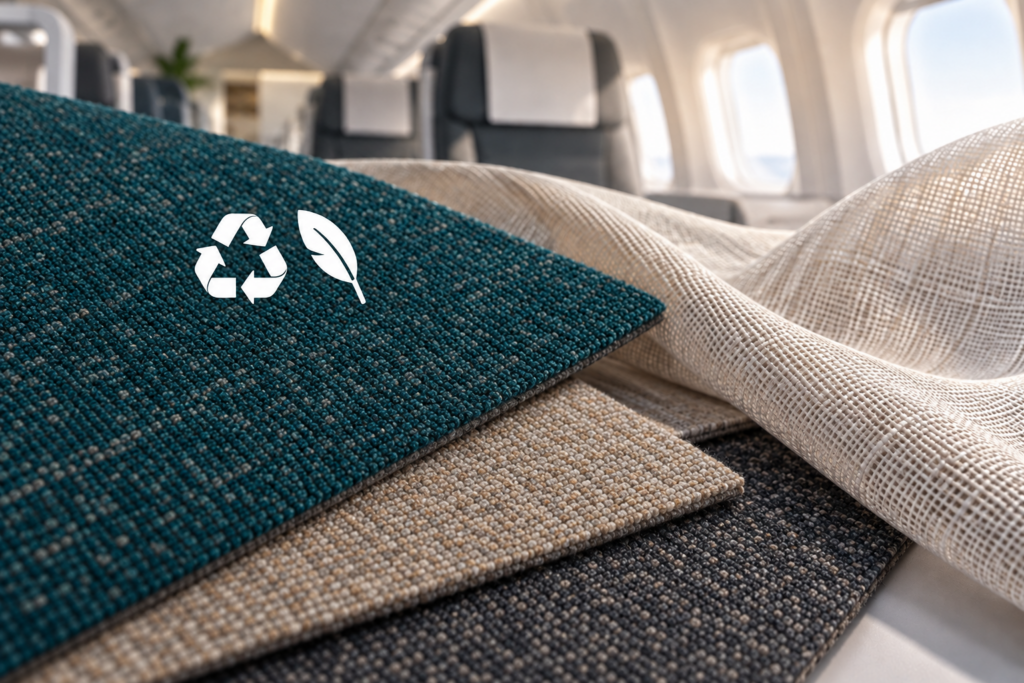
Materials are the main lever: recycled nylon carpet, lighter engineered fabrics and leathers, and solutions designed to be recyclable at end of life. The goal is a coherent material system aligned with technical and certification requirements, not an isolated “green” material. See the technical materials and NeoDye Technology.
How is a cabin’s carbon footprint reduced?
The footprint is reduced through several combined routes:
- Weight: lighter materials that cut fuel burn.
- Processes: water-free colour with NeoDye, reducing the water footprint.
- Materials: recycled and recyclable content that reduces virgin raw material.
- Service life: maintenance that extends textile life.
No single route solves the problem; the effect is in combining them.
What role does Zero Waste play?
A Zero Waste programme organises reduction, reuse and recycling, designing for less waste from the outset. It is the operational translation of circularity within our R&D and Sustainability work.
Frequently asked questions about sustainable aircraft interior design
How is a cabin’s carbon footprint reduced?
By combining several routes: lighter materials that cut fuel burn, recycled and recyclable content that reduces virgin raw material, water-free colour processes such as NeoDye that reduce the water footprint, and maintenance that extends textile service life. The effect comes from adding these measures, not from any single one.
Does sustainability compromise performance?
No. Recycled and lighter constructions are engineered to meet the same fire and durability requirements as any cabin material.
Sustainable aircraft interior textile design with sustainable materials combines responsible materials, low-impact processes and long service life. To see our approach, explore our R&D and Sustainability.