


Key takeaways about flame retardant fabric
Every textile inside the cabin must resist fire; flame retardant fabric is a core safety material. There are two routes: inherent, with the property in the fibre, and treated, with a finish after weaving. Inherent fabrics keep their performance through washing and wear; treated fabrics can lose it over time. Cabin fabrics must meet CS 25.853 / FAR 25.853; the typical test is vertical flammability. It is used in seats, curtains and dividers, often with a fire-blocking barrier underneath. Fire Blocking develops certified fire-performing textiles.
Every textile inside an aircraft cabin must resist fire, and flame-retardant fabric achieves that. It slows ignition and limits flame spread, which protects passengers and buys evacuation time.
So how does it work? How is it tested? And where is it used? This guide answers each.
What is flame retardant fabric?
Flame retardant fabric slows ignition and limits flame spread. It is used across the cabin, in seats, curtains, dividers and other textiles. It is a safety requirement, not an option.
Inherent or treated flame retardant fabric?
There are two routes to fire performance. Inherent fabrics carry the property in the fibre itself. Treated fabrics receive a flame-retardant finish after weaving. Inherent fabrics keep their performance through washing and wear, while treated fabrics can lose it over time, so the use case guides the choice.
How is cabin fabric tested?
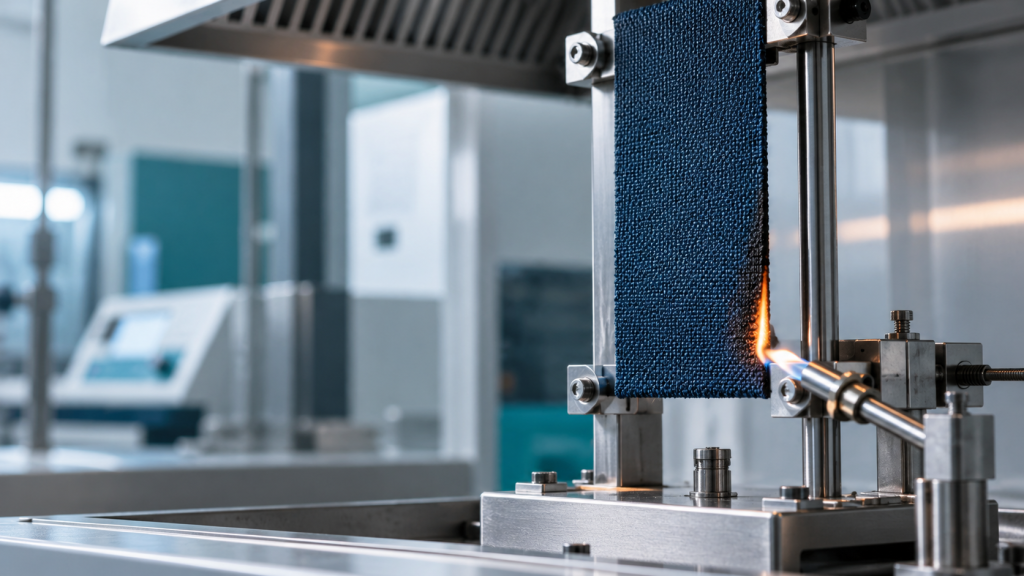
Cabin fabrics must meet CS 25.853 and Appendix F in Europe, and FAR 25.853 in the United States. Typical tests include vertical flammability. The exact test depends on the material, its use and its configuration, and a fabric is not approved until it passes the applicable one.
Beyond flame resistance, smoke generation and the toxicity of combustion gases are critical aspects of aircraft cabin fire safety. Dense smoke can impair visibility and hinder emergency evacuation, while toxic emissions can rapidly incapacitate passengers and crew. Although CS 25.853 primarily establishes flammability requirements for textiles, smoke density and heat release are also regulated for certain cabin components. Additional smoke and toxicity requirements may apply depending on aircraft manufacturer specifications.
Where is it used in the cabin?
Flame retardant fabric appears across the cabin, in seats, curtains and dividers. A fire blocking layer adds a barrier under seat covers where required.
How does Industrial Neotex apply it?
Industrial Neotex develops certified fire-performing textiles for commercial and corporate aircraft. Each project follows the ordinary client certification and validation process, backed by EASA Part 21 approvals and EN 9100 quality.
Frequently asked questions about flame retardant fabric
Inherent or treated flame retardant fabric?
Inherent keeps its performance through washing and wear. Treated can lose it over time, so the use case decides.
What test must cabin fabric pass?
It must meet CS 25.853 / FAR 25.853. The exact test depends on the material, its use and its configuration.
Where is flame retardant fabric used?
In seats, curtains, dividers and other cabin textiles, often with a fire blocking barrier underneath.
Fire performance is specified, tested and documented, never assumed. To review your materials, talk to an engineer.