


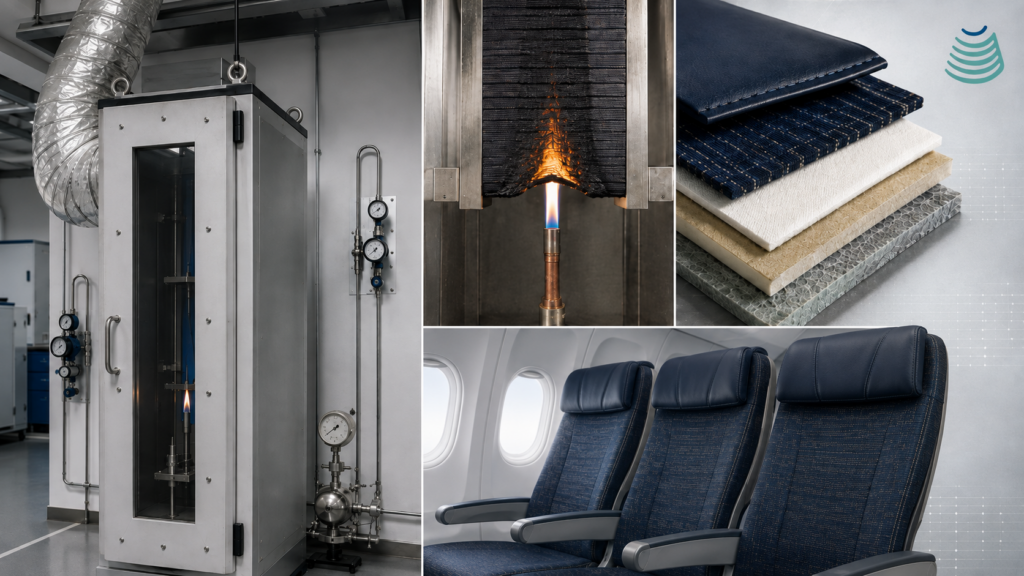
Key takeaways about Fire Blocking in aircraft seats
- Fire Blocking is a fire protection barrier incorporated into an aircraft seat assembly to influence how the seat behaves when exposed to an ignition source.
- A fire blocking layer can be positioned between the outer upholstery and underlying foam or other seat materials.
- Fire blocking foam and flame-retardant fabric perform different functions within an aircraft seat construction.
- Flame-retardant fabrics generally provide fire performance as a textile layer, while Fire Blocking provides a barrier function within the seat assembly.
- FAR 25.853 and CS-25 provide important regulatory references for aircraft cabin fire protection requirements.
- The oil burner test is one of the testing procedures associated with aircraft seat cushions and evaluates the behaviour of the relevant seat cushion configuration when exposed to a defined ignition source.
- OEM requirements can complement regulatory requirements when selecting and validating materials for aircraft seats.
- Neotex Fire Blocking barriers are multilayer textile structures designed to limit heat propagation and delay combustion, with testing to FAR/CS 25.853, BSS and OEM requirements.
- Neotex’s AeroCushion Pro seat cushions use multilayer technical foams and FR materials certified to FAR/CS 25.853, with testing according to Airbus and Boeing OEM requirements.
- For the textile component of an aircraft seat, Neotex also offers Seat Covers manufactured with FR technical fabrics compliant with FAR/CS 25.853 and Airbus and Boeing OEM requirements.
- For broader certification and compliance support, Neotex’s AeroCert Suite provides technical documentation, testing, material traceability and compliance validation for aircraft interiors.
Aircraft seat fire protection depends on the behaviour of the complete seat assembly when exposed to an ignition source. Materials used inside the seat need to meet specific aviation requirements, which is why fire blocking is an important consideration for aircraft seat manufacturers and suppliers.
A fire-blocking layer can act as a barrier between the ignition source and the materials beneath it. Depending on the design, this barrier can help control flame propagation and protect underlying components during a fire event.
But what exactly is fire blocking foam? How does a fire-blocking layer work? And how does it differ from a flame-retardant fabric?
What is fire blocking in aircraft seats?
Fire Blocking refers to a material or layer incorporated into an aircraft seat to provide a barrier against fire. Its purpose is to influence the behaviour of the seat assembly when exposed to an ignition source.
In an aircraft seat, the fire-blocking layer can be positioned between the outer upholstery and the foam or other underlying materials.
This configuration is particularly relevant because seat cushions contain materials that need to be assessed as part of the aircraft interior fire protection system.
Why is fire blocking important for aircraft seats?
Aircraft seat construction typically involves multiple layers and materials. The fire behaviour of the complete assembly depends on how these components interact when exposed to an ignition source.
A fire-blocking layer provides an additional barrier within this construction. Its performance therefore needs to be considered in relation to the overall seat design and the applicable aviation requirements.
How does a fire-blocking layer or foam barrier work?
A fire-blocking layer is designed to create a protective barrier within the seat structure. When exposed to a fire source, the barrier can help limit the interaction between the flame and the materials located underneath it.
The exact behaviour depends on the construction and technical characteristics of the material.
How does fire blocking foam protect aircraft seat cushions?
Fire blocking foam is used as part of a fire protection approach for aircraft seating. Its role depends on the design of the seat and the specification of the material.
The barrier can be incorporated around or between other seat materials to influence how fire reaches the underlying foam and other components.
For aircraft applications, its performance needs to be assessed through the relevant testing procedures rather than based solely on the material description.
Fire blocking layer vs fire-resistant seat construction
Fire blocking should be considered as one element within a wider seat construction. Upholstery, foam, fire-blocking materials and other components can all contribute to the behaviour of the finished assembly.
For this reason, material selection needs to consider the complete seat system and the requirements applicable to the specific aircraft programme.
Fire blocking foam vs flame-retardant fabric
Fire blocking foam and flame-retardant fabric are related to aircraft fire protection, but they perform different functions.
A flame-retardant fabric is generally used as a textile layer and is designed to provide a defined response to fire. Fire blocking, by contrast, refers to the barrier function provided within the seat construction.
What is the difference between fire blocking and flame-retardant fabric?
The main difference is their role within the seat system.
A flame-retardant fabric can be used as an outer textile layer, while a fire-blocking material is positioned within the construction to provide a barrier between the upholstery and underlying materials.
Both need to be selected according to the application and the applicable requirements.
Can fire blocking and flame-retardant fabrics be used together?
Aircraft seat designs can incorporate multiple fire protection elements. The appropriate configuration depends on the seat design, material specifications and certification requirements.
The relevant tests should therefore evaluate the configuration required for the intended application.
Fire blocking certification and aircraft seat testing
Aircraft interior materials must comply with the regulatory framework applicable to the aircraft and component. For large aircraft, FAA FAR Part 25 and EASA CS-25 provide important regulatory references.
Requirements for aircraft seat materials include specific fire testing procedures.
FAR 25.853 and CS-25 fire requirements
FAR 25.853 addresses fire protection requirements for aircraft cabin interiors. The corresponding European framework is included within CS-25.
The exact requirements and testing procedures depend on the component and its application.
Oil burner test for aircraft seat cushions
The oil burner test is one of the testing procedures associated with aircraft seat cushions. It evaluates the behaviour of the seat cushion assembly when exposed to a defined ignition source.
Testing is carried out according to established procedures and specifications. The objective is to verify the fire behaviour of the relevant seat configuration.
Why OEM material specifications matter
Regulatory requirements are one part of the material selection process. Aircraft manufacturers and OEMs may also establish additional material specifications for their programmes.
For this reason, suppliers need to consider both the applicable regulatory framework and the technical specifications defined for the intended application.
Neotex Fire Blocking solution and specifications
The Neotex Fire Blocking solution is designed for aircraft applications where fire-blocking protection is required within the seat construction.
Its technical characteristics and application should be evaluated according to the requirements of each project.
For detailed information about the material, visit the Neotex Fire Blocking product page.
Fire Blocking materials for aircraft interiors
Fire Blocking forms part of Neotex’s range of technical materials for aerospace applications. Its use should be considered together with the construction of the seat and the relevant certification requirements.
Neotex also provides information about its certification capabilities through the certifications section.
For additional information about fire-resistant aircraft interior materials, see the article on fire-resistant cabin materials.
Frequently asked questions about fire blocking in aircraft seats
What is fire blocking foam?
Fire blocking foam is a material used within an aircraft seat construction to provide a fire barrier. Its role is to influence the behaviour of the seat assembly when exposed to an ignition source.
Is fire-blocking material certified for aviation?
The applicable certification and testing requirements depend on the material, seat configuration and aircraft programme. Materials must be evaluated according to the relevant aviation regulations and specifications.
What is the difference between fire blocking and flame-retardant fabric?
A flame-retardant fabric is generally an outer textile layer designed to provide a defined response to fire. Fire blocking refers to a barrier function within the seat construction that helps protect underlying materials.
How does fire blocking work in an aircraft seat?
A fire-blocking layer is positioned within the seat assembly to act as a barrier between the ignition source and underlying materials. Its performance depends on the material, construction and specific application.
Fire blocking is therefore an important component of aircraft seat fire protection. The right solution must be assessed according to the complete seat construction, applicable regulations, testing procedures and OEM specifications. To learn more about Neotex Fire Blocking, contact the fire protection team.